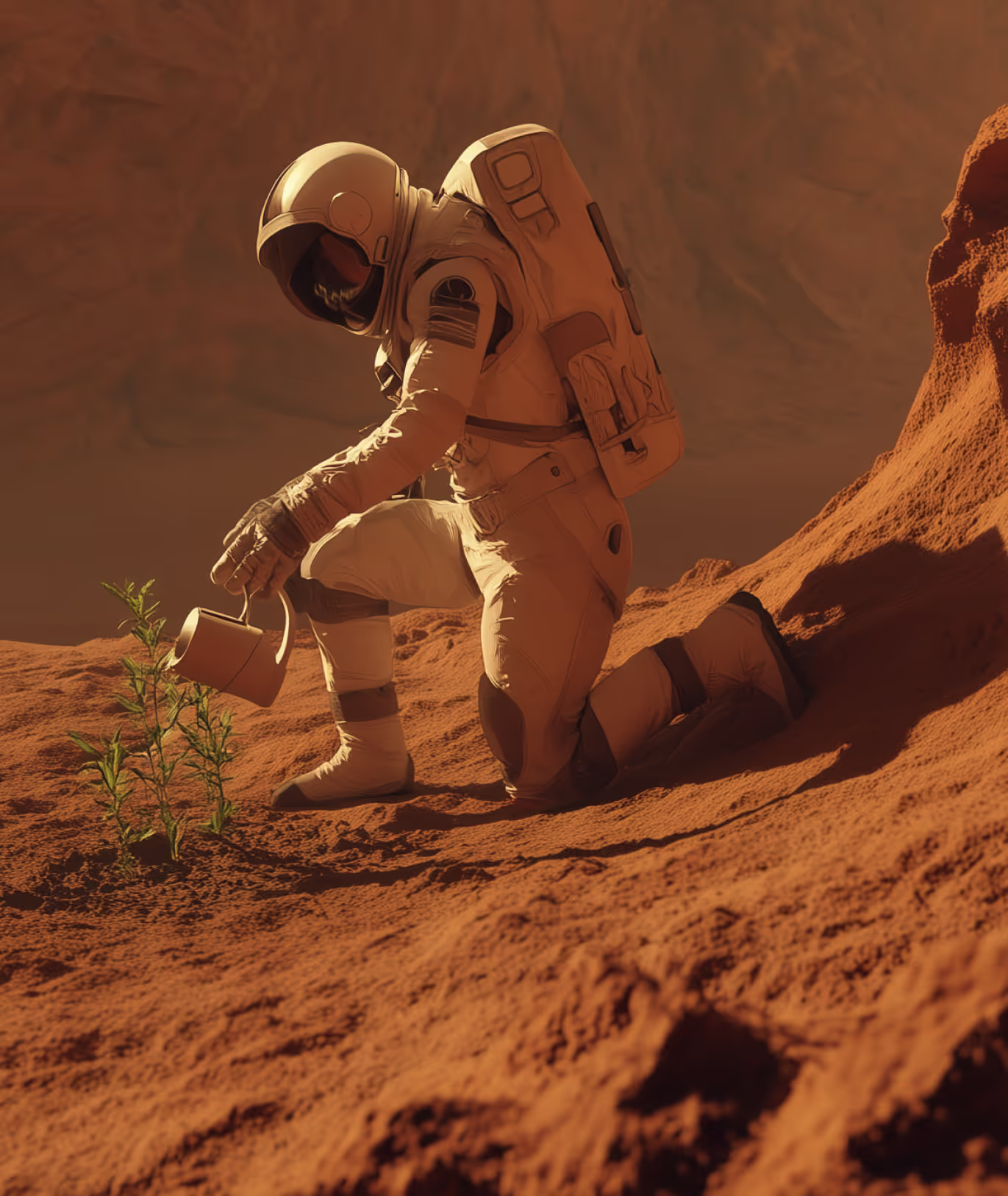
The dome hums—soft, careful, like a heartbeat that knows it has to last. Outside is Mars: red, silent, endless. No rain. No topsoil. No second chances.
You unzip a small pouch and hold the season in your hand.
On Earth, fertilizer arrives as tonnage—pallets, bags, spreaders, a choreography of mass. Here, the math is different. Every atom you bring has to become a leaf, a stalk, a calorie. There are no trucks to hide inefficiency. No storms to blame for losses. If a nutrient leaves the plant’s reach, it isn’t “runoff.” It’s failure.
And that’s when the thought lands: you would never broadcast 120 kilos of anything in zero gravity and hope for the best. You’d design something smaller. More exact. Predictable. You’d want fertilizer to behave less like dust and more like software—defined inputs, controlled release, no surprises. An algorithm for hunger.
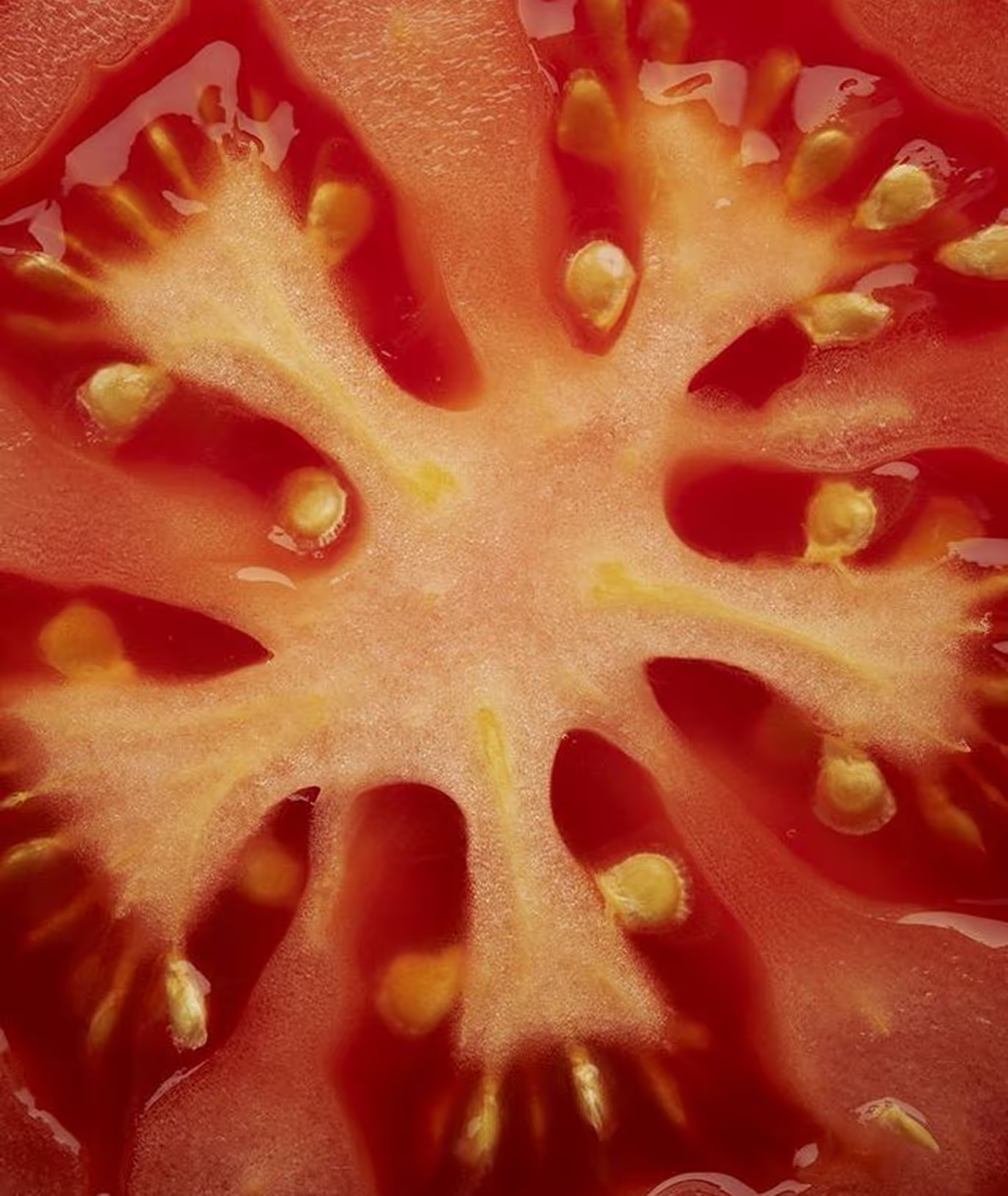
You click the tablet between your fingers. It’s the size of a pocket watch and has the same quiet confidence. You place it where the roots will be. Not a performance. Just intent.
Later, back on Earth, you watch a spreader cut a perfect line across a green field and feel a strange, almost guilty nostalgia. It is beautiful in the way old methods are beautiful—honest machines doing honest work. And yet you can’t unsee the other thing: the invisible river of nitrogen rising into the sky, the shiny threads of phosphorus binding themselves to soil in ways the crop can’t touch, the potassium lodged in clays like coins in a jar without a key. We call it “applied.” The plants call it “unavailable.”
We tolerated the waste because we could. Fuel was cheap, seasons forgiving, fields wide. We told ourselves more was safer. Safer than what? Than thinking harder?
Mars doesn’t give you that option. It forces you to track the truth molecule by molecule. That discipline is not a space story; it’s a farming story that got its courage back.
When we started building tablets, we weren’t chasing a headline. We were chasing a feeling: the feeling that everything you put into a field should end up in a plant. Carbon-encapsulated, slow release, tuned to the crop’s rhythm—feed when there’s demand, wait when there isn’t. It’s a simple promise, which is to say it took years.
The first time you try it, it feels like a magic trick you don’t quite trust. One tablet for one hectare? Your hands remember heft. Your back remembers bags. Your head remembers numbers with zeros. Then the season unfolds and your eyes adjust. The color holds. The growth steadies. The ditch after a storm looks like a ditch, not a confession. Nothing spectacular. Just a quiet refusal to waste.
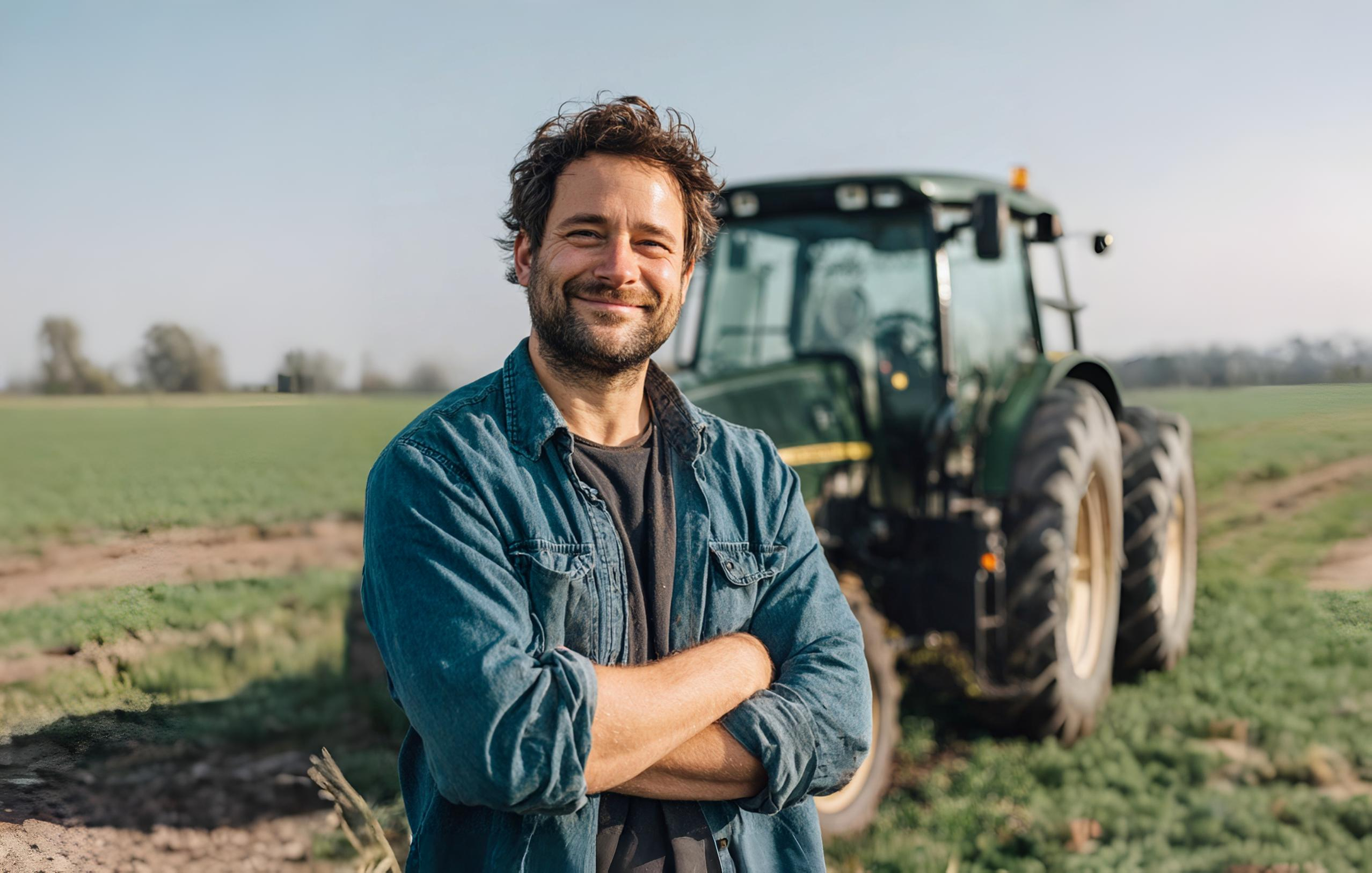
A farmer we worked with laughed at his own skepticism.
“I kept waiting for the catch,” he said, squinting down a row that looked too ordinary to be interesting.
“Turns out the catch was not wasting money.”
Another farmer ran a split field—old practice on the left, tablet on the right. He walked it alone at dusk, the way people walk churches when no one’s around. It wasn’t the yield map at the end that won him. It was the calm in the middle: the plants asking and the system answering without drama. He didn’t call it sustainability. He called it relief.
This is what designing for Mars does to you: it embarrasses excuses. You stop arguing with physics. You stop pretending losses are tradition and start treating them like bugs. You measure, fix, measure again. You treat soil like a ship where every leak matters, because it does.
And you notice something else—something we don’t talk about enough. Not all leaves are equal. A taller plant isn’t always a better plant. In ryegrass, a small shift in lipid content—a leaf carrying more energy per bite—means richer milk and less methane. Composition matters. Quality sneaks past quantity and waves from the finish line. You don’t have to see it to feel it. The cows tell you.
This, too, is a Mars lesson: the goal isn’t “more.” It’s “enough, precisely.”
People ask if we built tablets for space. We didn’t. We built them for places where waste is expensive, which is to say everywhere you care about the future. The logistics fall in line—fewer passes, fewer trucks, fewer hours spent feeding the atmosphere. But the heart of it isn’t logistics. It’s respect. For time. For land. For the idea that agriculture can be both rigorous and kind.
There’s a version of this story where we talk about carbon footprints, and we will. There’s a version where we show trials and curves and the way the release matches the plant’s appetite, and we’ll show those too. But there’s also this: the feeling of holding a hectare between your fingers and understanding that weight is not the same as value.
Someday someone will plant the first seed on Mars. It will be a small green contradiction under a sky that never meant to allow it. People will share the picture. They’ll call it a miracle. It won’t be. It will be the obvious outcome of a decision we’re making now: to farm as if every gram matters.
Maybe we’re not building for Mars. Maybe Mars is building us—forcing us to admit that the systems we have can be better, cleaner, calmer. That precision isn’t cold; it’s generous. It gives back time and water and trust.
And maybe the real frontier isn’t up there at all. Maybe it’s here, in fields that look ordinary until you notice they’ve stopped apologizing for their inputs.
You seal the dome behind you and hear the soft hum again. The season breathes. The leaves don’t care about slogans. They care about timing. They care about availability. They care that when they ask, someone answers.
On Mars, that’s life support.
On Earth, that’s just good farming.
— The Farm Minerals
Try the Mars Test:
10 hectares.
10 tablets.
One season.
Together, we’ll measure, compare, and share results with farmers around the world. Contact us.