Phoenix · Northern Plains
0.4–0.6%
Phoenix found this much perchlorate by mass in its samples. A crew would screen its growing medium for these salts.
Hecht et al.
Jezero Crater, Mars
Imagine bringing fertilizer all the way to Mars
and losing 70% of what you applied.
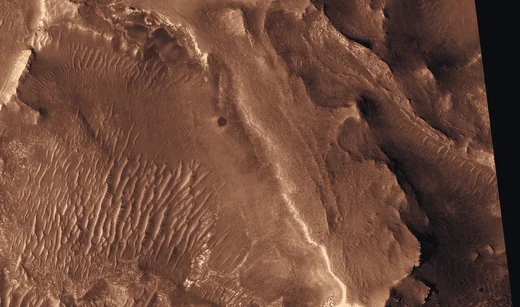
Imagined loss scenario · Toned HiRISE survey · NASA/JPL-Caltech/UArizona
Jezero / Kodiak
Look closely at the tilted layers
in that ridge.
Perseverance took this picture from the crater floor. A river left those layers behind as it built its delta into a lake.
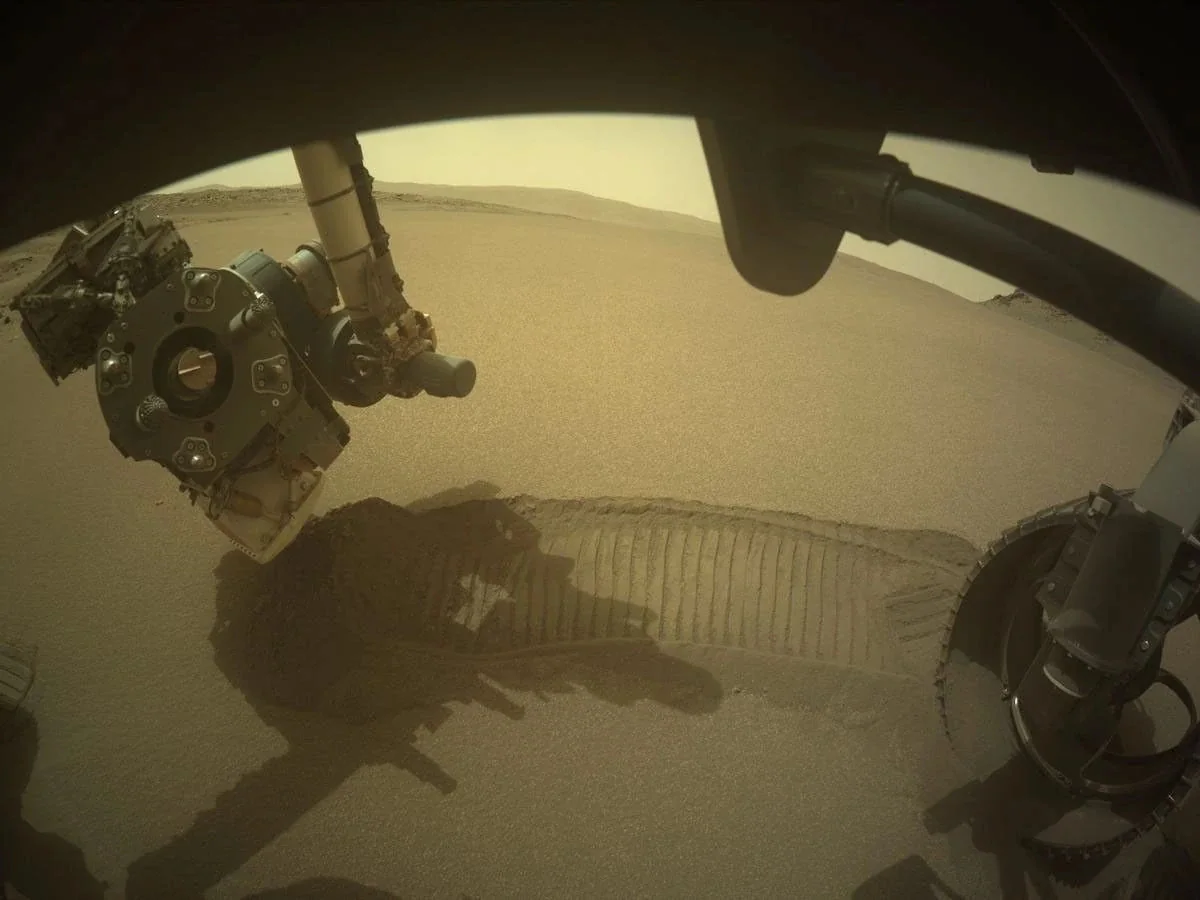
Today a rover wheel scrapes the dry ground. This is where a grower would start.
Read the finding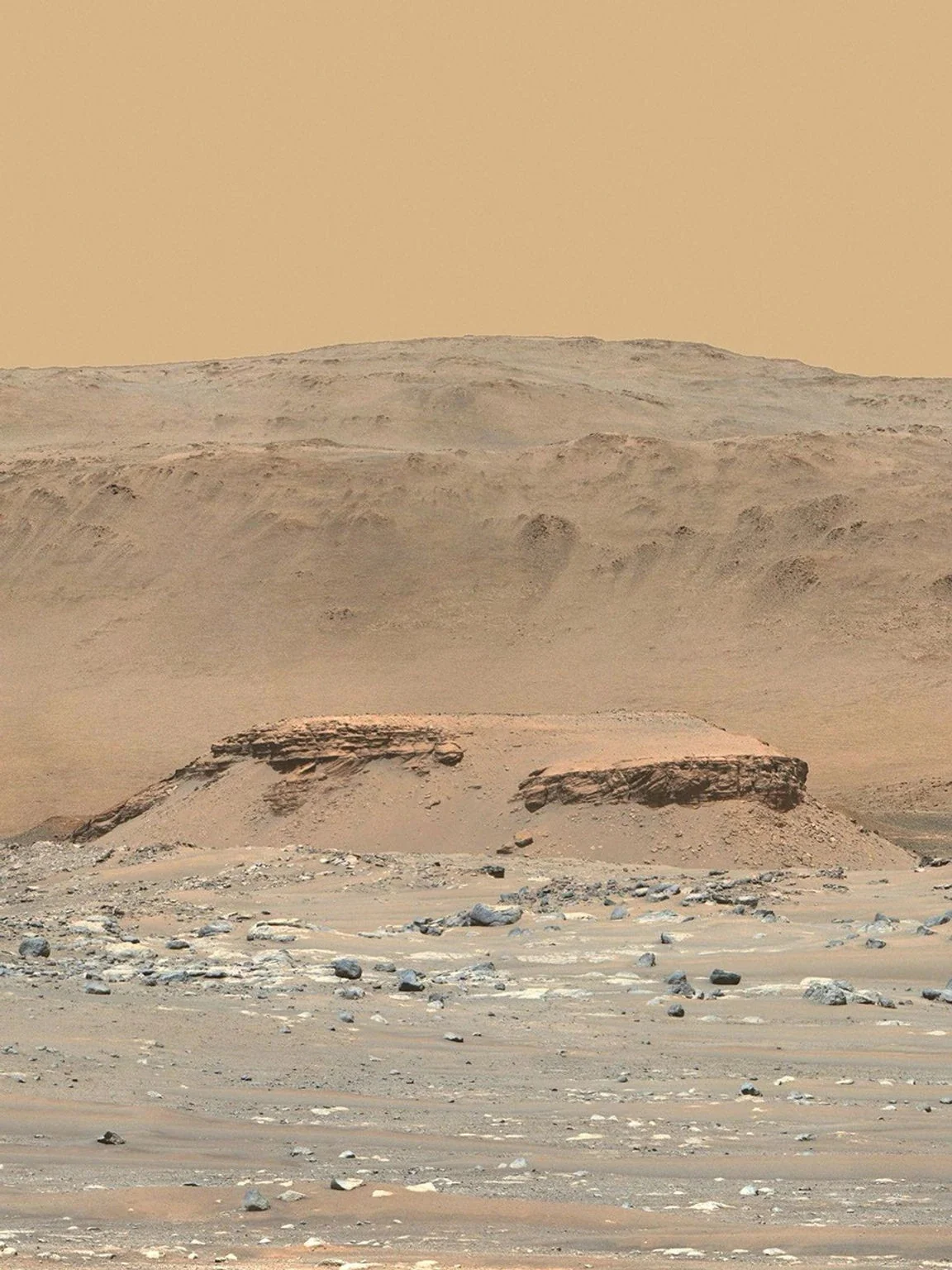
Material at the surface
The wheel exposes rock fragments, sand and dust. Before planting in this regolith, a grower would need to test a sample from the site.
Phoenix · Northern Plains
Phoenix found this much perchlorate by mass in its samples. A crew would screen its growing medium for these salts.
Hecht et al.Rocknest · Gale Crater
Estimated nitrate in windblown material. How much of that nitrogen could a root use? A crew could test that inside a sealed greenhouse.
Stern et al.
Inside the pressure shell
Mars’s surface pressure relative to Earth’s average. Inside the sealed greenhouse, a leaf releases water into the air. Can the crew get it back?
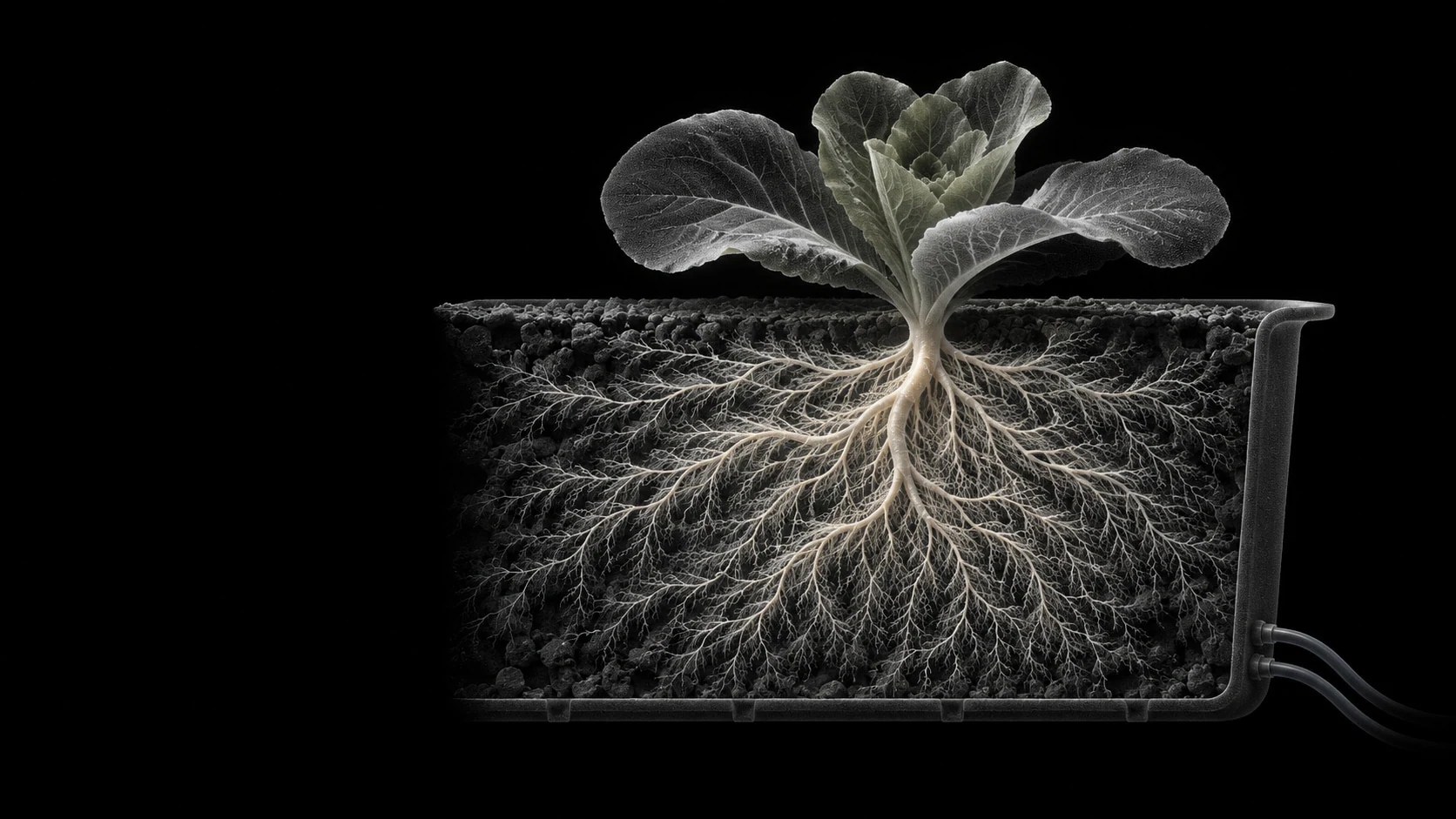
NASA/JPL · Mars at a glanceHabitat interior · Concept illustration
Inside the growing bed
A condenser can recover water from the air. Unused solution can drain from the bed back to the tank.
Roots take up mineral ions at different rates. A full tank can still be short of a nutrient.
Pick a leaf for dinner. Its minerals leave the growing bed with it. What feeds the next crop?

Earth analogues / The harvest record
Illustrated circulation path
Utah · Hydroponic lettuce
After each harvest, the team set fresh lettuce seedlings in the same solution. They topped it up with water and nutrients through all 25 crops.
Langenfeld and Bugbee, 2026Antarctica · EDEN ISS
Another team grew vegetables on 12.5 m² for roughly nine months. The ten people wintering at the station ate most of the harvest.
Zabel et al., 2020For a crew bound for Mars, the next harvest starts in the cargo hold.
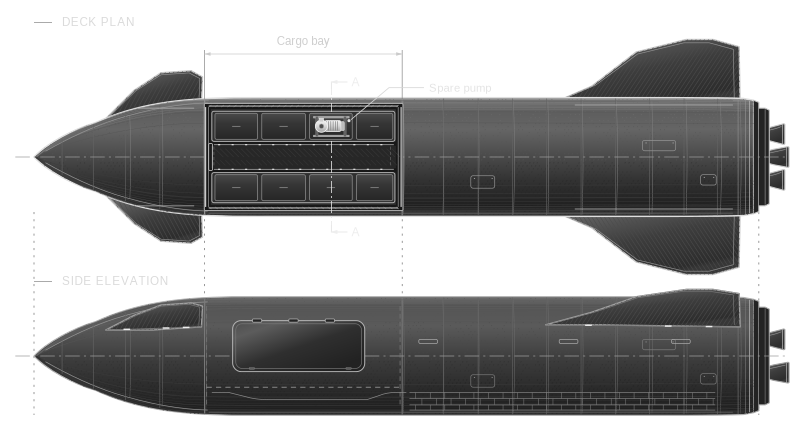
Mars cargo manifest
Imagine the pump stops a week before harvest.
The roots can’t wait for a launch.
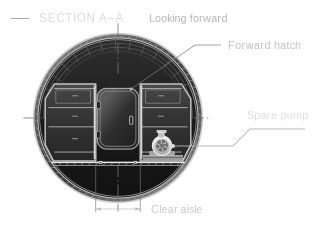
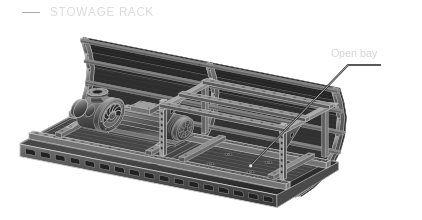
How much room
does fertilizer
really need?
Cargo comparison / Earth reference
2.5 acres · One application on Earth
Farm Minerals compares dry product weights for the same nutrient band and timing. On Earth, the crop also draws nutrients from the soil.
Published application referencePut the fertilizer, water, pumps and spares on one scale. Then measure the room they take when packed.
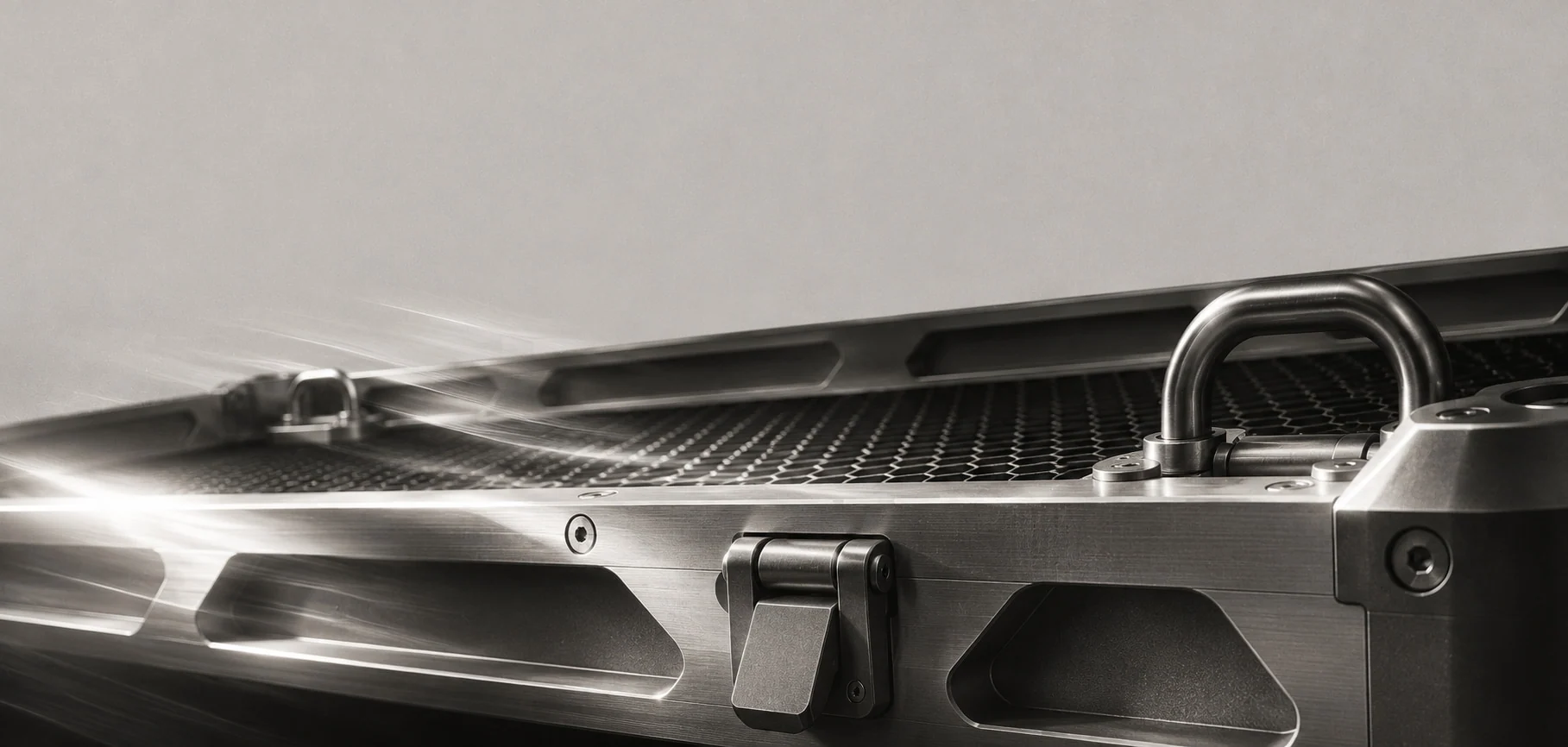
Cargo mounting fixture · Concept illustration
The launch decision
Even a gram the crop never uses has to make the trip.
Its replacement starts on a launchpad.
Is that the future we want on Mars?

Meet
Cosmos fertilizers for the
next generation of humans.
That horizon was the edge of this tablet.
Pressed mineral face / Farm Minerals · NOVA · NPK
Nova design target on Earth
Designed for successful farming in space.