
CropTab™ Nova / An imagined mission
What could grow on Mars?
A 90-second film without sound. Scroll to move through it in either direction, or press Play. Every line is in the flight transcript after the film.
After the flight
CropTab™ Nova. Fertilizer in a tablet.
One six-sided tablet of pressed, graphite-coloured mineral, small enough to hold between a finger and a thumb. Its design target on Earth is 50 acres.
- Face
- Farm Minerals emblem, NOVA, NPK
- Form
- Flattened hexagon with soft corners and a broad bevel
- Target
- 1 tab. 50 acres. A design target, not a product you can order yet.

Inside the cargo module
Same shelves. Same seeds.
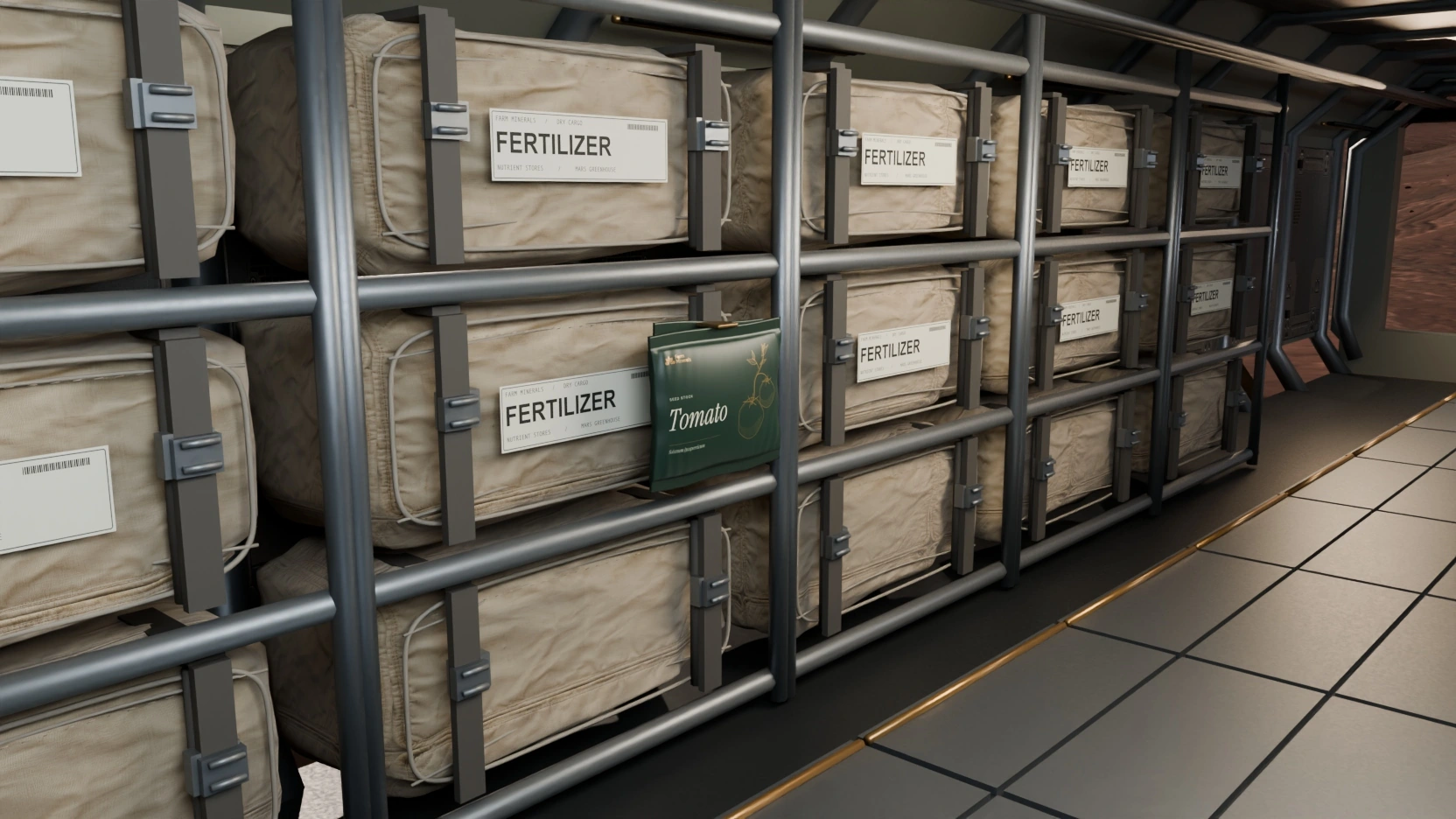
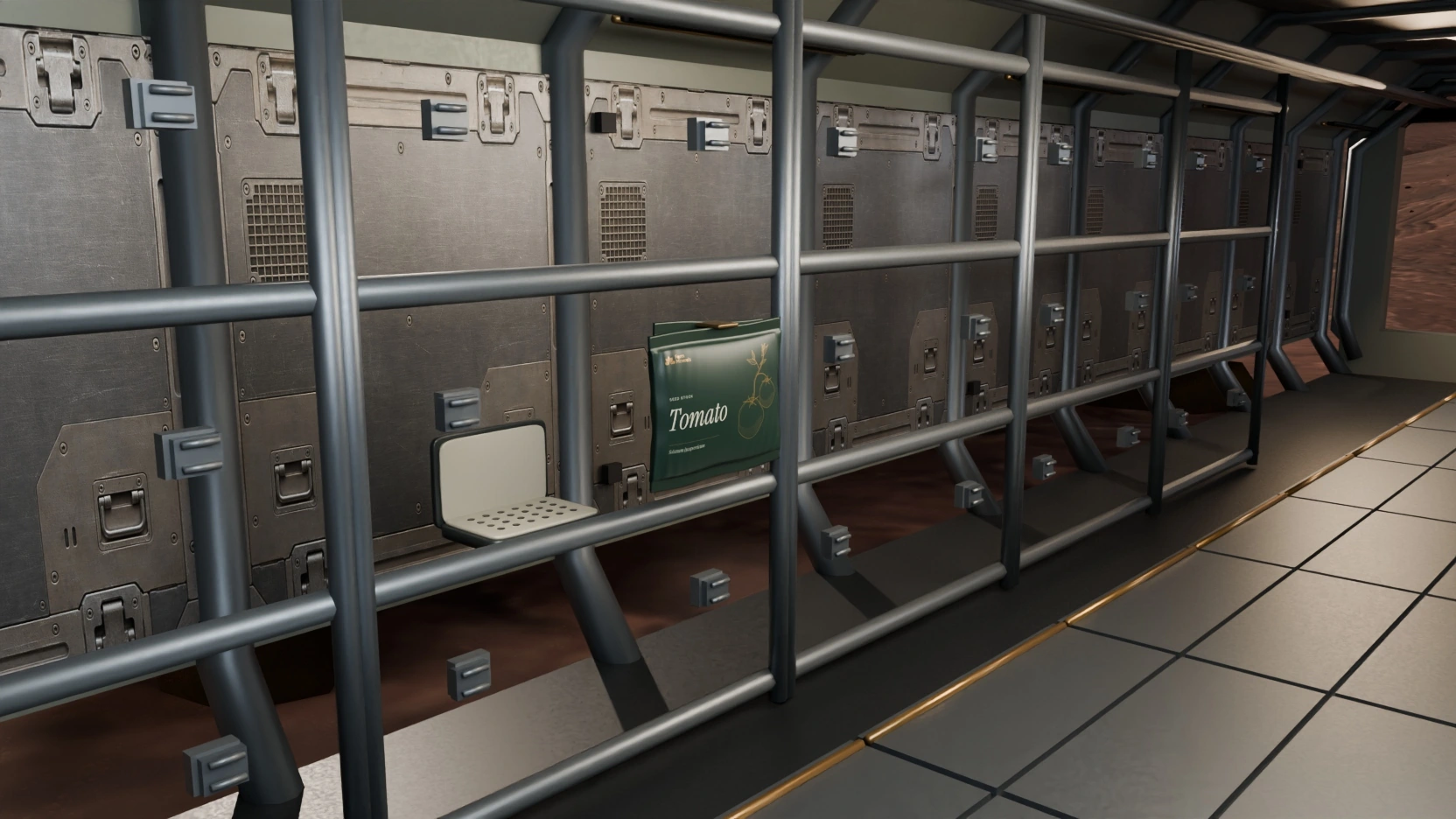
One cargo camera, two ways to feed the greenhouse. The tomato seed pouch flies in both. Only the fertilizer load changes: a wall of sacks, or one small case of Nova tablets.
The flight, in words
Mars orbit
What could grow on Mars?
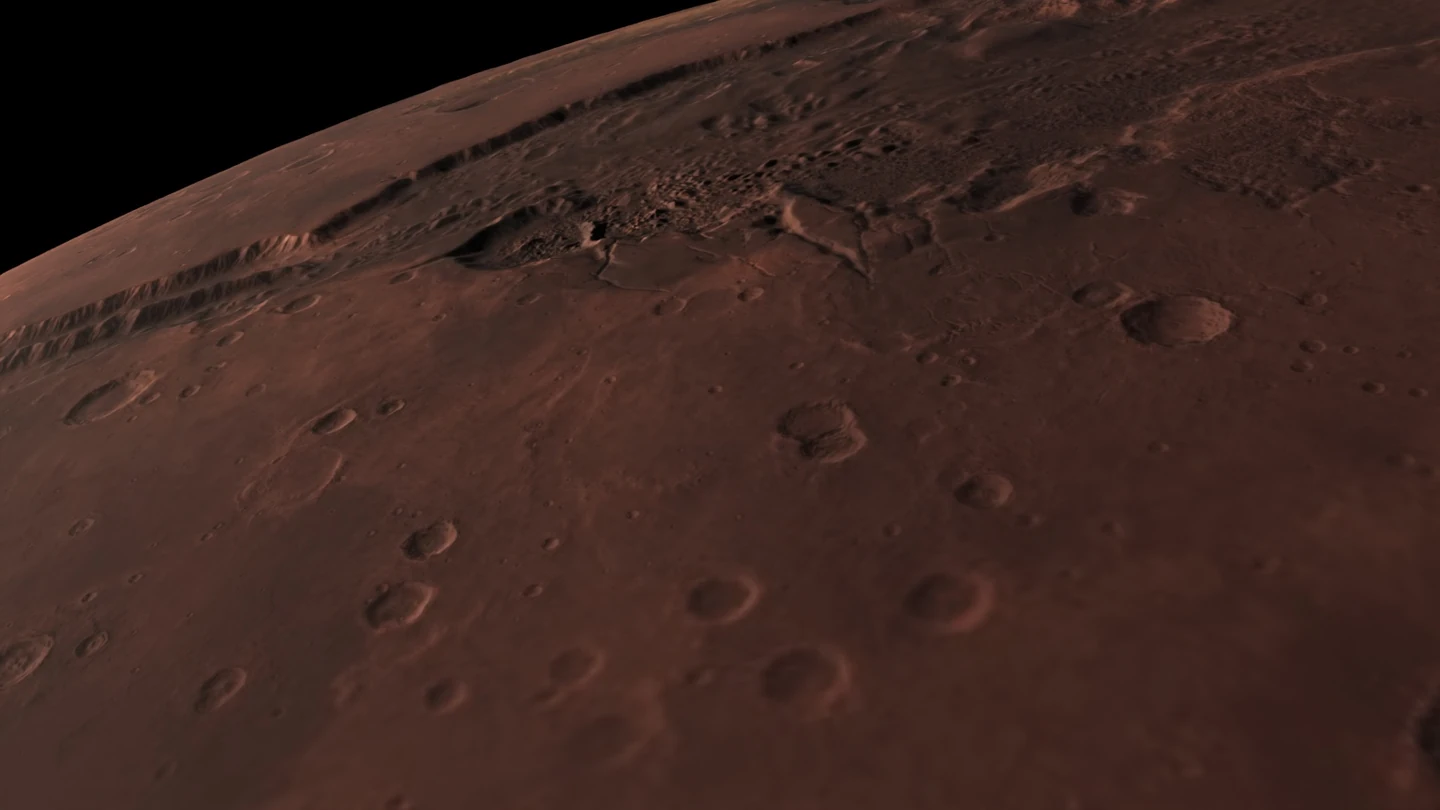
Mars alone. A rust-coloured horizon fills the frame, and the camera falls toward Eos Chasma until one lit greenhouse shows against the ridge. It is smaller than you expect.
The airlock
No words here. The camera tracks to the habitat and enters by the outer hatch, which closes behind it. Then the inner hatch opens onto the tomato rows.
The first ripe tomato
The crew wants to pick it on Mars and eat it warm from the vine.
One planted row, flown at leaf height. A ripe tomato hangs on its truss. A leaf slides across the lens, and the cargo door is waiting at the end of the aisle.
What fits in a pocket
The seeds? A shirt pocket will do.
The aisle runs straight into the cargo module. A deep-green seed pouch hangs on the rack, a small copper tomato stamped on its face.
What fills a wall
The fertilizer takes up a whole wall. 4,500 pounds for the greenhouse.
How much of that has to fly?
Strapped sacks, shelf after shelf, to the far end of the module. The figure belongs to an imagined Mars cargo plan. At the observation window, one question is left hanging.
The supernova
No words here either. The frame holds at the pressure window. One white point above the ridge brightens fast, blooms in the lens and stays. The physics comes from the core-collapse supernova SN 1987A, with its time compressed for the film. From this far away, an exploding star is only more light at a single point. NASA’s account of SN 1987A
The catch
CropTab Nova. Fertilizer in a tablet.
Leave the bags on Earth.
A glint inside the cabin. A grower catches a small tablet between finger and thumb and turns it until the Farm Minerals emblem, NOVA and NPK read in the light.
The second light
1 tab. 50 acres.
The camera pulls back along the pressure shell. Same ridge, same airlock, same rows, now seen from outside, and another grow light on over the tomatoes. Nova design target on Earth.
Film credits. Mars colour map by Solar System Scope (CC BY 4.0), with HRSC and MOLA elevation, THEMIS thermal imagery, the Caltech Murray Lab CTX mosaic and an Eos Chasma HiRISE stereo survey (NASA/JPL-Caltech/University of Arizona). Terrain scans by Poly Haven. Tomato foliage adapted from a photograph by Jack Dykinga, USDA Agricultural Research Service.